

Best Studio Monitors for Home Studio: Top 5 Picks
If you’re getting deeper into music production, you’re probably thinking about getting a pair of flat-response studio monitors (or nearfield monitors) to produce music in your home studio.
Equipping your home studio with audio monitors designed to create, mix and master music will always give you important advantages for making decisions professionally, whether you’re working on professional music productions or you’re just starting to record and mix your own music.
Studio monitors: The main benefits of using them
Using nearfield monitors to mix and master in your home studio offers several advantages over studio headphones or consumer audio systems not designed for music production. The main benefits are:
- They’ll reduce the listening fatigue that comes from always working with headphones. As long as you work at moderate volumes, of course. They’ll also help prevent long-term hearing damage and loss (this is hugely important!).
- Unlike Hi-Fi or consumer speakers, these monitors give you a flat response for making mix and recording decisions, a more realistic stereo image than headphones, and a sound pressure or frequency response much closer to how your music will actually sound when played back on speaker-based systems (PA, radio, Hi-Fi, etc.).

Things to consider before buying monitors for your home studio
The usual starting point for music production is a pair of the best studio headphones, and you also need to be aware of the risks of using flat-response monitors in an acoustically untreated room. The sound coming from the monitors won’t be 100% accurate, since it’ll be combined with the reflections of your home studio room.
The woofer size can be an important factor to decide before buying monitors. For a home studio room (between 9 and 20 m² / 100–215 sq ft), a 5 to 7 inch driver will be more than enough.
That said, buying a pair of professional monitors is always a solid mid to long-term investment, since in the future these monitors can follow you to better-treated rooms. It’s also common in mixing and mastering studios to have multiple pairs as reference monitoring to compare between them when making decisions.
How to position your monitors in the home studio

Once you’ve got your new speakers, try to form an equilateral triangle between the two monitors and your listening position, have the tweeter at ear level and pointing at you, and if possible, have the longest wall of the room behind your listening position. Don’t push the monitors too close to the wall or you’ll get excessive bass, and try to keep them at equal distance from each side wall.
Is it worth spending a lot on home studio monitors?
Budget decisions for upgrading your home studio are always personal, but from GuitarRec Studio we can tell you that the quality of these monitors has improved considerably, especially in what we consider the best monitors in the affordable or budget range.
That said, the higher the budget, the better specs and sound you’ll get, although as with most studio gear, a small jump in quality often means doubling or tripling the price. Don’t doubt it: investing in good monitoring always shows up in the result of your mixes, masters and productions.
List of the best studio monitors (nearfield and flat response)
Below is a selection of several models across different price ranges that we find really interesting (in ascending order), along with their main technical specs and some personal opinions after using them or from fellow professionals who have recorded or mixed with them.
All the models are active nearfield monitors, which means they have the power stage or amplifier built-in and are designed for close listening (usually within arm’s reach). We list the 5″ models, and in most cases there are 7″ versions available for a slightly higher price. Remember that store prices are usually per unit (you’ll need to buy 2 unless they come as an L and R pack).
1. JBL 305P MKII Monitors (or JBL 306P)
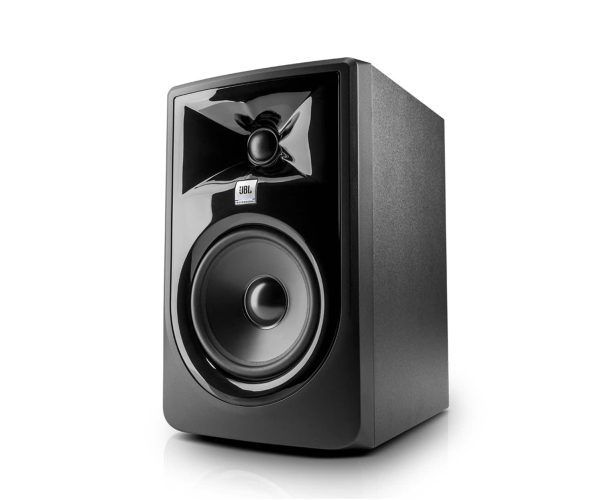
JBL is a brand more commonly associated with consumer or Hi-Fi audio than with the more technical world of studio music production, but their current models have positioned them as one of the budget-friendly options with excellent value for money for project studios.
With a very accurate sound and a flat frequency response, it’s undoubtedly an option worth considering to seriously get started with home studio gear at a relatively affordable price.
- Driver configuration: 5″ woofer and 1″ tweeter
- Frequency response (+/- 3dB): 49 Hz – 20 kHz
- Max SPL: 108 dB (peak)
- Adjustable input sensitivity: +4dBu / -10dB
- Balanced XLR and 1/4″ TRS line inputs
- Dimensions: 185 x 298 x 231 mm (W x H x D)
2. KRK Rokit RP5 G5 Monitors (or KRK Rokit RP7)
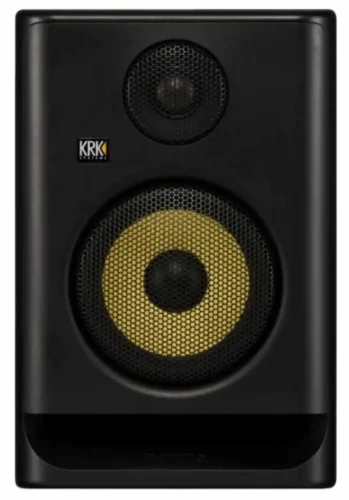
KRK’s popularity has been growing steadily for years. We’ve seen their monitors in countless project studios. In the Rokit series, they haven’t dropped the ball: we keep hearing users who are more than happy with their sound. KRK monitors are among the best-selling studio monitors right now.
You’ll probably see them more often in studios related to bass-heavy music (trap, urban, electronic, etc.), but there’s no doubt that they’re one of the most solid options to get started on the right foot as an online music producer in any style.
- 5″ woofer and 1″ tweeter
- 55W Class D bi-amplified
- Frequency response: 43 Hz – 40 kHz
- Graphic EQ with 25 visual presets
- Balanced XLR and 1/4″ connectors
- Dimensions (H x W x D): 285 x 190 x 241 mm
3. Yamaha HS5 Monitors (or Yamaha HS7)

These are among the most commonly used monitors in home studios, and Yamaha is one of the most iconic brands in the evolution of recording studios (thanks to the legendary Yamaha NS10, which for years was essential in any professional studio). Like all other models on this list, they’re active, which means you can connect them directly to your USB audio interface.
Following the brand’s philosophy, they offer solid value for money and a balanced, cold response (maybe sometimes too cold, according to some). A strong option for those who value a flat, surgical sound when making recording and mixing decisions in home studios and professional studios.
- 2-way active nearfield monitor
- 5″ woofer and 1″ tweeter
- Frequency response: 54 Hz – 30 kHz
- Balanced XLR and 1/4″ TRS inputs
- Adjustable input level
- Dimensions: 170 x 285 x 222 mm (W x H x D)
4. ADAM T5V Monitors

ADAM is another of the most widely used brands in project and professional studios around the world, especially in their higher-end monitors. The more affordable models in the new T5V and T7V series keep one of the brand’s signature features: the ribbon tweeter, which makes the high frequencies smoother and more pleasant to listen to.
As with most models above, you get frequency controls to fine-tune (or compensate) for your mix room. Beyond being one of the best-selling studio monitors, ADAMs are one of the best options to finalize your recording and mixing studio in the most professional and reliable way.
- 5″ woofer
- 1.9″ U-ART ribbon tweeter
- Frequency range: 45 Hz – 25 kHz
- Rear bass reflex port
- XLR and RCA line inputs
- Dimensions: 179 x 298 x 297 mm (W x D x H)
5. Neumann KH120 Monitors (or KH80)

The legendary brand behind some of the best microphones for studio vocal recording started developing monitors a few years back, and they’ve become one of the most powerful options for any recording studio looking to make a serious investment for a completely reliable sound — with no exaggeration in any frequency range, helping your mixes translate well across most playback systems.
The Neumann KH120 are one of the best options in nearfield monitoring for those looking for a long-term professional standard. After years using them in our Barcelona studio, we can confirm that, while they don’t belong to the most affordable range, their performance, depth and detail in every sound justify every euro of the investment.
- 5.25″ woofer and 1″ tweeter
- Frequency response: 52 Hz – 21 kHz (± 3dB)
- EQ for Bass / Mids / Highs
- Magnetically shielded
- Balanced XLR analog input
- Dimensions: 277 x 182 x 220 mm (H x W x D)
Room correction software for home studio monitors
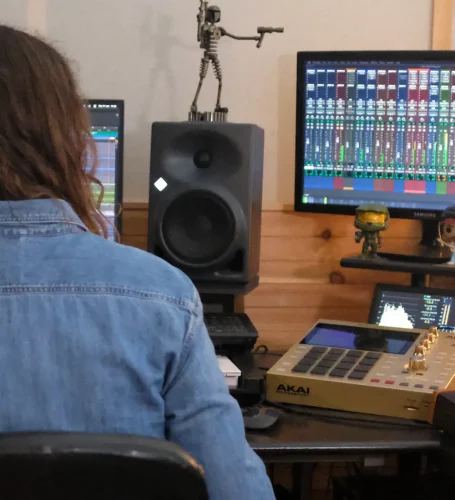
As mentioned above, to use studio monitors properly you need to acoustically treat your room. To help with that, in terms of the frequency response curve, at GuitarRec we use a correction plugin (especially helpful for home studio rooms with limited acoustic treatment) that also includes built-in presets to flatten the response of the most popular headphones. The plugin is Sonarworks SoundID Reference (with measurement microphone included). It offers a fully professional solution by processing your DAW’s master bus while monitoring, using an EQ that corrects the frequencies added by your room — giving you a flat response from your studio monitors. If you prefer a hardware solution without relying on a plugin in your DAW, there’s also the IK Multimedia ARC Studio.
Important: take care of your ears by working at moderate volumes during long mixing sessions with your monitors (hearing loss is a serious and irreversible problem!).
Check out more home studio gear tutorials here.
*This article contains affiliate links that help us keep the site running. Don’t worry — the price you pay is the same! If you buy something through these links, we’ll earn a small commission. Thanks for your support!
Image by maiconherdina0 on Pixabay

Article written by Vicen Martínez, music producer, guitarist, and songwriter. Founder of GuitarRec – Online Recording Studio.