

Best Electric Guitar Amplifiers: A Guide to Choosing Yours
The electric guitar, by its very nature, needs to be amplified. The pickups it carries generate an electrical signal that, without amplification, can barely be heard. It has been this way since its origins, and it remains so today — although the path between the guitar and the final sound, whether using a guitar amplifier or not, has changed a lot.
We are in the full era of amplifier simulation, both through software and dedicated hardware: pedalboards like the Line 6 Helix, Kemper or Quad Cortex, or simulation software like GuitarRig, offer incredible sounds, you don’t have to carry any weight, you plug them into the venue’s PA or the rehearsal room’s system, put on headphones and you can enjoy distortion, effects and all kinds of sounds instantly. If we speak in purely practical terms, the most efficient thing today is to have a simulator.
But the other path exists, and after more than twenty years professionally doing tours as a guitarist and guitar recordings and online productions at GuitarRec, I can tell you that the experience of playing through a real amplifier — the dynamics, the sound, the volume, even at low volumes — whether for rehearsing or recording guitars, remains enormously rewarding. The step of buying a real guitar amplifier is one I recommend you don’t skip.
In this guide I help you choose the amplifier that best suits your situation, with specific recommendations and everything you need to know before deciding to buy your first guitar amp.
What you should consider before choosing an amplifier
Before looking at specific models, there are three practical decisions you need to make. We’re not going to get into an electronics class, but rather what you really need to know to get your purchase right.
Tubes, transistors or digital: what type of amplifier to choose?
Tube amplifiers (also called valve amps) remain the standard for most guitarists. Their dynamic response — how the sound reacts to how hard or soft you play — is something that transistors and digital modelling still don’t fully replicate. The natural breakup of the tubes when you turn up the volume is a sound that simply keeps you hooked.
Transistor amplifiers (solid state) are lighter, cheaper and practically maintenance-free. They are an honest option to start with, especially if the budget is tight and above all if we’re not looking for sounds with that warm and crunchy touch so characteristic of tube amplifiers.
And then there are digital amplifiers, which are essentially an emulation: they carry amplifier modelling and multi-effects inside. If you’re going down this route, you’d probably be better off considering a dedicated multi-effects pedalboard directly, since the concept is very similar and usually offers more versatility — they even let you control presets via MIDI — although with these amplifiers you already have the speaker or cab included so you don’t depend on an external monitor.
My personal recommendation: whether you’ve been playing guitar for a while or you’re seriously just starting out, I recommend having at least one tube amplifier. Prices aren’t as high as many people think, and there are quite a few accessible models that sound really good.
Why choose a tube guitar amplifier?
A tube amplifier responds differently to how you play: if you attack softly, the sound cleans up; if you play hard, the amplifier starts to saturate naturally, with an organic distortion that transistors and digital modelling still can’t fully replicate. Although emulations once recorded can sound almost the same, that dynamic — that feeling that the amplifier “breathes” with the way you play — is what makes me, after more than twenty years playing and recording guitars, still recommend having at least one, even if it’s just for the pleasure of having it in front of you or behind you, playing for hours. The prices of entry-level models are more accessible than many people think, and the difference is noticeable from the very first chord.
Power: how many watts do I need?
Whether you have a rehearsal space or you’re going to play mainly at home, watts and volume are going to be a key factor. You don’t need a 100W amplifier to enjoy playing — in fact, a tube amplifier of 15 to 22 watts is enough for rehearsing, playing at home and even medium-sized gigs without any problem. Don’t overdo the power: you’d be surprised at the success that power attenuators for tube amplifiers have had, allowing you to get more out of their sound by turning up the gain without going overboard on volume.
Later on I’ll explain why even for large venues on professional tours, a small amplifier can be more than enough.
Speaker size: 10, 12 or 2×12 inches
The size of the speaker directly affects how the sound projects, the character of the resulting tone and how much the amplifier weighs. In short, the bigger it is, the heavier it is and the more low end it has.
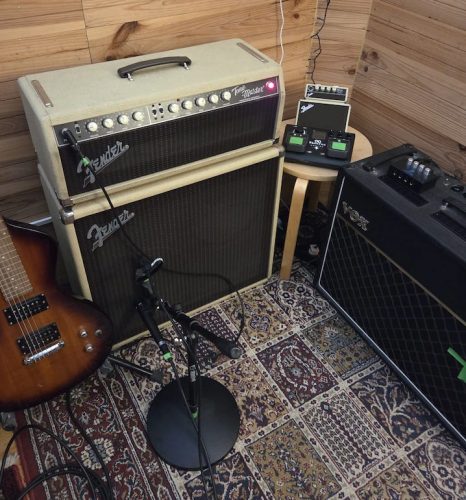
- 10 inches: compact and easy to transport. Enough for playing at home and rehearsals. The Fender Blues Junior, for example, has a 10″ speaker. There are little gems like the Fender Princeton (which we have at GuitarRec Studio, see photo) that has a 10-inch speaker.
- 12 inches: the standard size and the one I recommend for starting out. Good balance between body of sound and portability. The Fender Deluxe Reverb has a 12″ and is a classic for a reason. Perfect for playing at home, rehearsing with your band, even going on tour without any problem.
- 2×12 inches: more presence and body, but weighs considerably more. I don’t recommend it as a first amplifier, since the weight difference is considerable and for most situations a 1×12″ is more than enough.
Recommendation for starting out: an amplifier with a minimum 10 or 12-inch speaker. It’s the sweet spot between sound, versatility and convenience when transporting it.
Recommended electric guitar amplifiers
Below, a selection of amps organised by level of use and budget. Each one has its own particularities, and I give you my opinion based on the experience of having used, heard or recorded them over the years.
To get started: affordable and quality amplifiers
We start with a transistor, another tube and one digital modelling amp. Three worlds, but each of them perfect for getting started.
Fender Champion II
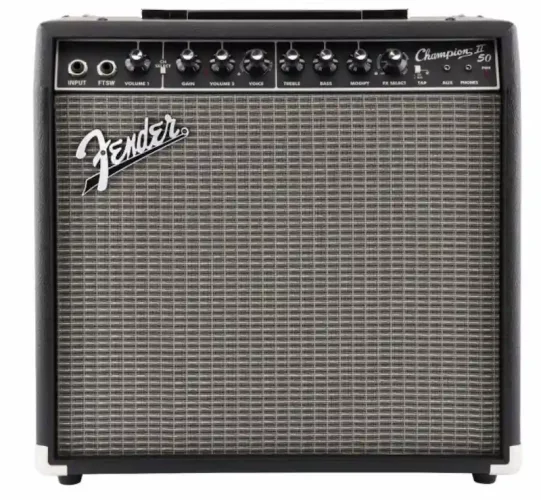
A Fender transistor amplifier, but with 50W that will allow you to cover your needs both at home and in your first band rehearsals. It has a 10-inch speaker, with which you’ll get a good sound (much better than its little brother which only has an 8″ speaker), two channels (clean and distortion) and an effects module with tremolo, delay and reverb. A good option to start playing your guitar through an amplifier.
Marshall M-MG50GFX-U 50W
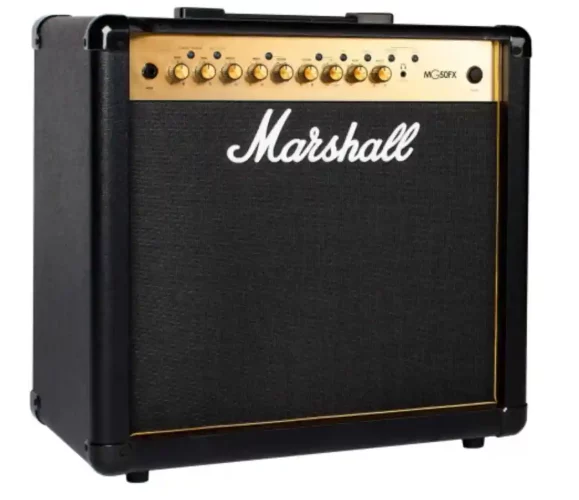
Now for the Marshall option: the iconic Marshall sound in a 50W combo with a custom 12-inch speaker. Four channels — clean, crunch, OD1 and OD2 — give you a wide range of tones, from crystal cleans to high gain. It includes built-in digital effects, a built-in tuner and an emulated headphone output for silent practice. It also comes with a footswitch to change presets on the fly. A solid entry point into the Marshall world with plenty of power for home and rehearsals.
BOSS Katana 50
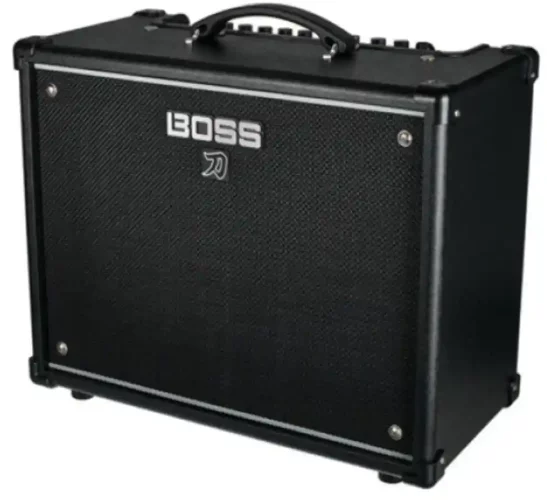
If what you’re looking for is an all-in-one in terms of effects and amplification, we can’t help but recommend this option: The legendary bestseller, BOSS Katana, a digital (simulation) amplifier for around €300 with everything you need in terms of guitar effects and power for home or band rehearsals.
The quality leap: mid-range
Let’s get serious, here are three tube options with which you’ll be able to get a fully professional sound and with which countless songs have been recorded and thousands of rehearsals and concerts have been played.
Fender Blues Junior IV and Hot Rod Deluxe IV: the Hot Rod family
The two brothers of the Fender Hot Rod family, and probably the most seen tube amplifiers on stages around the world. Both feature a Celestion A-Type 12-inch speaker and spring reverb, but the differences matter: the Blues Junior uses EL84 tubes (15W) with a single channel, while the Hot Rod Deluxe runs 6L6 tubes (40W) with three channels — clean, drive and more drive — plus an effects loop. More power, more versatility, more weight.
Fender Blues Junior IV — 15W, 1×12″, EL84 tubes.
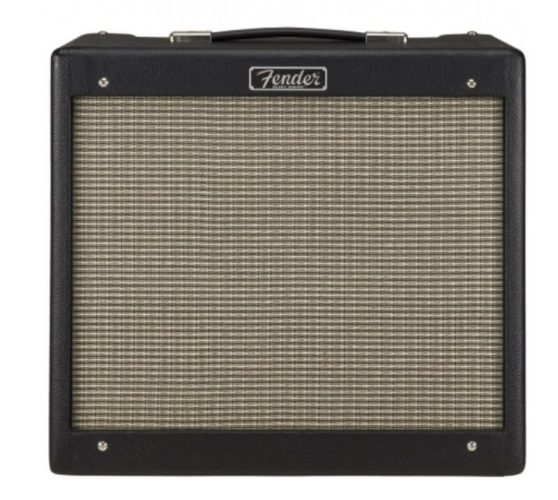
A tremendously popular amplifier, and for good reason. Warm sound that can remind us of clean guitar tones like Jeff Buckley, or crunchier sounds like Stevie Ray Vaughan. It’s the ideal weight to carry around: a guitar in one hand and the amplifier in the other, if you feel like taking your amp with you.
Fender Hot Rod Deluxe IV — 40W, 1×12″, 6L6 tubes.
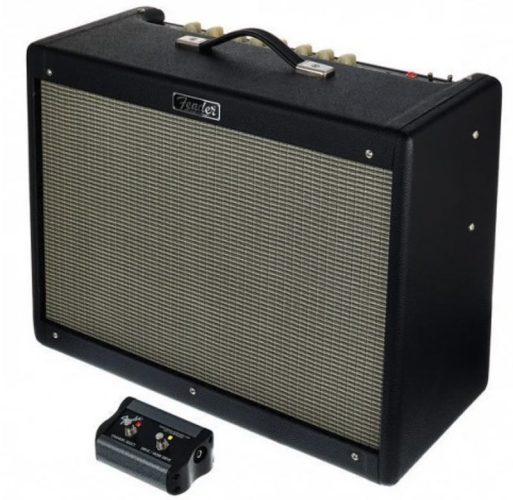
I personally owned a Hot Rod Deluxe and recorded with it on quite a few studio productions. It has impressive volume: you can play next to a drummer at full power and it won’t fall short. Like all tube amplifiers, when you start turning up the volume it begins to saturate — but with 40W of 6L6 it stays clean quite a bit longer than the Junior. Its three channels give you everything from crystal-clean to high gain without needing pedals (although it’s always recommended to enjoy a good distortion or overdrive pedal). If you’re looking for more headroom, more body and more versatility than the Blues Junior, the Hot Rod Deluxe is the natural next step within the same family.
With either of these two Fender classics you won’t go wrong and you won’t regret it.
Vox AC15C1
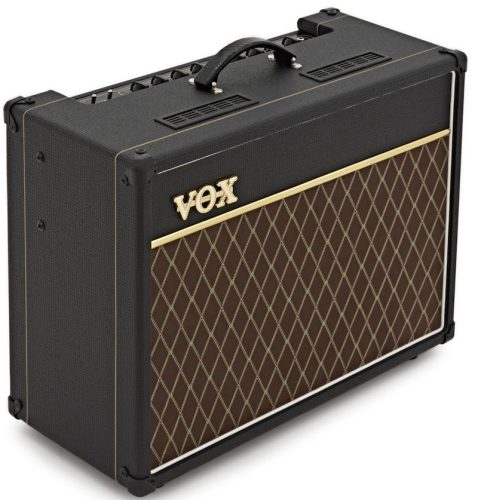
The classic British sound. EL84 tubes, Celestion Greenback 12-inch speaker, reverb and tremolo included. It’s the sound of The Beatles, Queen, U2 — if you’re looking for a different character from Fender, with more mids and a classic tone with a lot of body and very recognisable, the AC15 is the reference. 15W of tubes that are more than enough for rehearsal and live performance. This amp will give you many hours of pleasure both auditory and visual.
Amplifiers live: what nobody tells you
This is the part you won’t find in any shop’s technical specs, and that only someone who has spent years on stages can tell you.
A small amplifier works for large concerts. Yes, you read that right. In professional productions, the amplifier is mic’d up and goes through the venue’s PA system. You don’t need a 100W head to play at a festival — a 15-20W combo mic’d up is more than enough.
What does change depending on the size of the event is how you hear yourself on stage:
At mid-level concerts — venues, clubs, small festivals — having your amplifier behind you is a huge advantage. You don’t depend on your guitar coming through the floor monitors or the venue’s monitoring system, which can fail or not sound the way you need. With your amp at your back, you’ll always hear yourself. And that, when you’re playing live, is priceless.
On large professional tours, where you use in-ears (professional monitoring earphones), the reality is that many times you’re not really hearing the real amplifier you have behind you. In fact, on many tours the amplifiers are placed under the stage or off to the side, to avoid interfering with vocal microphones and other instruments — just like plexiglass is placed in front of drum kits to control the volume on stage. In that context, the amplifier ends up being more a matter of personal pleasure than technical necessity. And that’s why, at that level of touring, many guitarists end up going directly with simulation.
But as I mentioned before, none of this takes away from the fact that having your own amplifier for rehearsing, composing and playing is an experience worth having.
Recording: real amplifier vs. simulation
Recording an amplifier properly requires technique: microphone placement, preamp selection, mic position relative to the speaker, and in professional studios it’s common to record with multiple microphones that are then blended to achieve the final sound.
A good music producer knows when to use a real amplifier and when to rely on simulation, depending on the sound they’re after for each song and each context. There’s no single answer — what matters is having good judgement and the right tools. As a tip I can tell you that many times, in our studio we start online productions with a base of real guitar amplifier sounds and then layers of less important sounds or details are added with software simulation using the Kemper.
If you’re interested in diving deeper into this topic, I recommend checking out our article on common mistakes when recording guitars, where we go over the most common errors and how to avoid them.
And if you want to record guitars with a real amplifier but don’t have the equipment, acoustics or technical experience to do it at home, at GuitarRec we take care of that. We work with real amplifiers, studio microphones and the entire professional chain so your guitar sounds the way it should.
Summary: which amplifier to choose?
If you’re just starting out, a tube amplifier with a 10 or 12-inch speaker is the safest choice and the one you’ll enjoy for the longest time. You don’t need to spend a fortune — the models in the affordable range section already sound really good and will give you many hours of enjoyment. I’d avoid heavier combos or the head and cabinet format for starting out, as the weight and size can end up being a barrier to actually playing.
That doesn’t take away from exploring other options either: I myself have also worked with simulator pedalboards, Kemper and similar tools, and they really are fantastic work tools. But the experience of having a real amplifier in front of you is something else entirely.
And remember: you can always start with a small amplifier and, if your path takes you to bigger stages, that same amplifier mic’d up will take you much further than you imagine.
*This article contains affiliate links that help us maintain our site. Don’t worry: the price you pay is the same! If you buy something through these links, we will receive a small commission. Thank you for your support!

Article written by Vicen Martínez, music producer, guitarist, and songwriter. Founder of GuitarRec – Online Recording Studio.