

Top Delay Pedals for Electric Guitar (Best Bang for Your Buck)
Delay is one of those effects that, once you try it, you don’t want to play electric guitar without it. From short slapback echoes that add depth and a vintage feel, to tempo-synced delays for creating epic and exciting rhythmic patterns, to infinite repeats that build immersive atmospheres. Some of these delay pedals can be found on the best pedalboards around the world and have become essential creative tools for both rhythm and lead guitarists, capable of transporting us to another sonic universe.
And while many multi-effects units include delay effects, nothing beats having a dedicated pedal, with physical controls you can tweak in real time and sound quality tailored to your style.
If you’re building your pedalboard or looking for that missing delay sound, this guide to the best delay pedals from the GuitarRec online recording studio is for you.
Types of Delay Pedals and Their Characteristics
Before rushing into a purchase, it’s worth getting to know the main types of delay, as each offers a different character and functionality. Here’s a summary of the most common ones (later on, we’ll show you some of the best pedals in each category):
- Analog delay: Based on BBD chips, it offers warm, rounded, and slightly degraded repeats. Ideal for classic and organic sounds, it’s widely used in genres like rock, blues, or country, and especially valued for its vintage character and natural musicality.
- Digital delay: Delivers clean, precise, and fully controllable echoes. It’s the most commonly used in modern productions—perfect for tempo-synced delays with subdivisions. Very popular in pop, electronic, funk, and any style that needs a clear and defined signal.
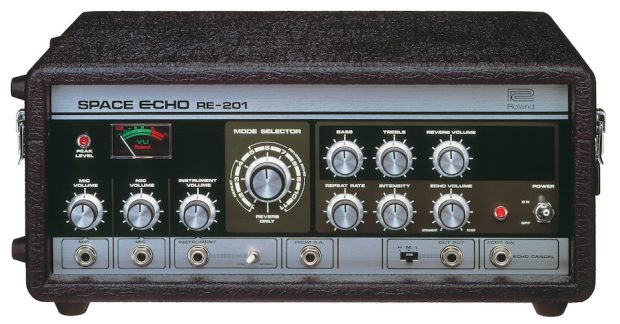
- Tape delay (tape simulation): Inspired by legendary units like the Roland Space Echo or the Echoplex, it emulates the warm, saturated, and slightly unstable sound of tape delays. Great for ambient, surf, lo-fi, and psychedelic styles thanks to its ability to add texture and character.
- Reverse delay: Produces repeats that are played backwards, creating an immersive and dreamlike effect. A key creative tool in genres like shoegaze, indie, and modern folk, as well as atmospheric intros or sections in ambient or post-rock.
- Multitap delay: Generates multiple repeats spaced at different intervals, forming complex rhythmic patterns and spatial textures. Very useful in instrumental music, post-rock, advanced electronic, and production effects requiring movement and stereo depth.
- Shimmer delay: Adds harmonics (usually an octave above) to the repeats, creating bright, ethereal, almost celestial echoes. Often mistaken for reverb, it’s actually a delay with pitch shifting that brings a magical atmosphere to your sound. Common in ambient, post-rock, and dream pop for building immersive soundscapes.
Dedicated Delay Pedal or Multi-Effects Unit?
It depends on your playing style and budget. Multi-effects units offer many features in one device: versatility, presets, and multiple delay types, usually with built-in tap tempo and live-use memories. They’re practical and (some) more affordable.
But if you like to fine-tune your sound, a dedicated delay pedal gives you full control—and many models also include tap tempo or multiple delay modes. Combined with one of the best distortion and overdrive pedals, you’ll have more than enough for a top-tier guitar sound palette.
Plus, let’s be honest: building your own pedalboard is part of the journey. Individual pedals have that visual and emotional factor that feeds the G.A.S. (Gear Acquisition Syndrome). Just seeing them on your board is inspiring, and they offer endless combinations once you’ve built a small collection.
Here Are Some of the Best Delay Pedals for Electric Guitar
Let’s get to it. Keep in mind there are hundreds of delay options on the market, but these are some that we at GuitarRec can confidently recommend: we’ve used them on tour, in our online guitar recordings, had them in our hands at some point, or seen them used countless times on pro guitarists’ pedalboards.
Boss DD-8 Digital Delay
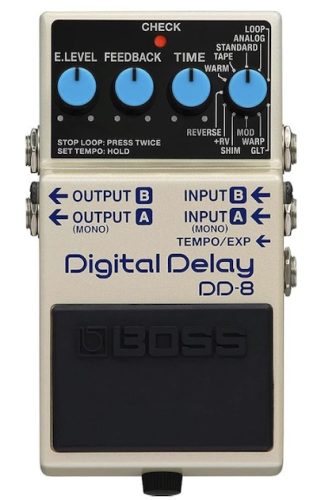
An extremely versatile digital delay pedal, perfect for guitarists looking for a single unit that can do it all. The DD series has been a staple for guitarists since the 1980s and is now one of the most iconic pedals from the legendary Japanese brand. This model offers 10 different modes, including analog-style (emulation), tape, reverse, shimmer, and multitap, plus a built-in looper, compact format, silent footswitch, and tap tempo. Excellent sound quality, compact size—perfect for both stage and studio. You can’t go wrong with this one.
Ibanez ADMini Delay Pedal
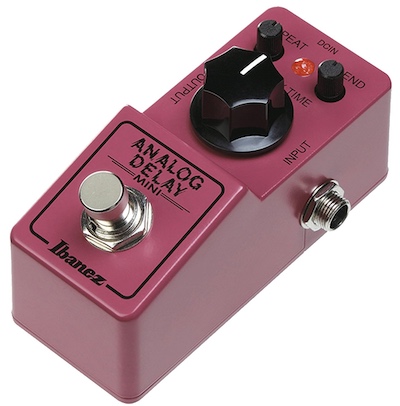
A mini-format analog delay that stands out for its warm and natural sound. With excellent value and quality, Ibanez is another iconic brand behind some of the most legendary delays featured on historic albums. The ADMini is based on the classic AD9, delivering smooth, degraded repeats—perfect for expressive solos or slapback-style effects. Its compact size makes it ideal for smaller pedalboards without sacrificing that sought-after analog tone, and it’s a great step up in your sound whether you’re practicing, performing live, or writing songs with a more inspiring guitar tone.
TC Electronic Flashback 2 Delay
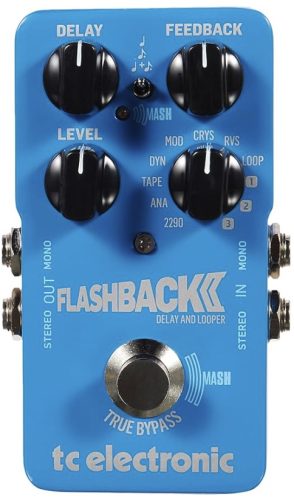
One of the most complete and popular digital delay pedals in recent years. The brand TC Electronic, well-known in the world of studio and live effects, has earned a top spot on many pedalboards thanks to its incredible value for money. The Flashback 2 includes 8 delay types (tape, analog, reverse, dynamic, mod, etc.), a built-in looper, tap tempo, and the innovative MASH technology, which turns the footswitch into a pressure-sensitive expression controller. It also allows you to load custom presets via TonePrint, making it a highly versatile tool for both live performance and studio work.
Electro-Harmonix Memory Toy
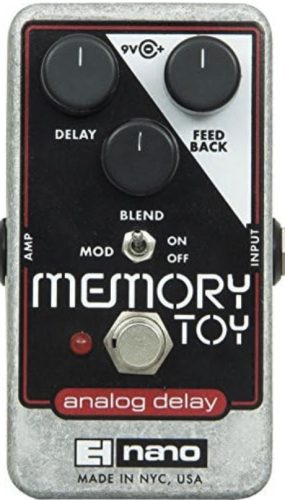
Analog delay based on BBD (Bucket Brigade Device) chips, a direct descendant of the legendary Memory Man, one of the most iconic pedals of all time. Used by guitarists like The Edge (U2), Johnny Greenwood (Radiohead), and Ed O’Brien, its warm and modulated tone has defined countless recordings since the ’70s. The Memory Boy adds chorus/vibrato-style modulation and an input for an expression pedal, while the Memory Toy retains the essence in a more compact and affordable format. Both are a solid choice if you’re looking for a delay with character and a lot of personality.
Dunlop Echoplex Delay
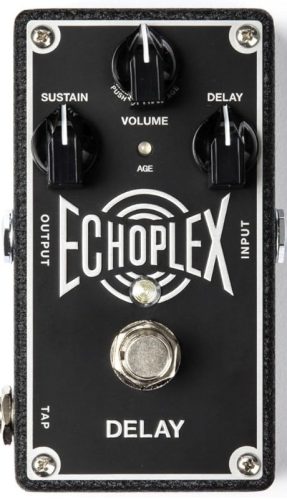
Inspired by the legendary Echoplex EP-3, this delay pedal captures the warm, saturated character of vintage tape delays, but in a modern, rugged, and straightforward format. It offers a sound full of personality, perfect for adding depth and texture without losing clarity. Ideal for styles like surf, psychedelia, ambient, or simply for those who want a delay with vintage soul. One of the best current examples of how to revive a classic while keeping it practical.
Universal Audio Galaxy ’74 Tape Echo & Reverb
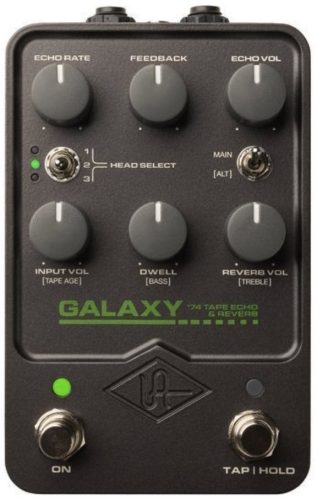
We couldn’t leave out one of the most faithful and powerful emulations of one of the most iconic tape delay units: the Roland Space Echo RE-201. The renowned brand Universal Audio, known for its home studio and professional studio gear, has launched a line of high-end pedals, and this is one of its flagship models. The Galaxy ’74 offers an organic, warm, and saturated sound, combining tape delay with authentic spring reverb. Perfect for ambient, psychedelia, post-rock, or any guitarist looking for a vintage sonic experience with modern reliability.
Boss DD-200 Digital Delay
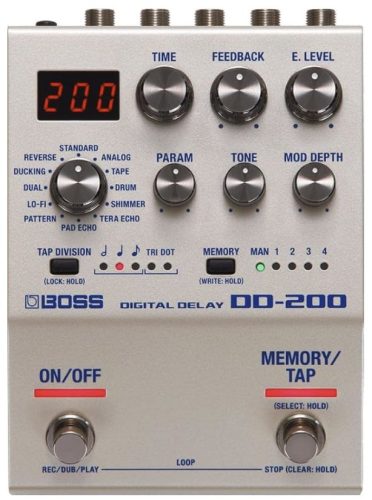
Now we enter the realm of high-end multi-delay units with presets, MIDI, and advanced features. The Boss DD-500 is one of the best options on the market for those looking for a professional delay with studio-quality sound, capable of replacing multiple devices in one. It includes 12 different modes like analog, tape, shimmer, reverse, dual, pattern, looper, and more, plus memory slots, tap tempo, expression pedal control, and full MIDI control. Perfect for adding to your pedalboard or syncing with tempo changes on tour, in the studio, or in professional music productions.
Without a doubt, one of the best delay pedals available today.
Strymon BigSky
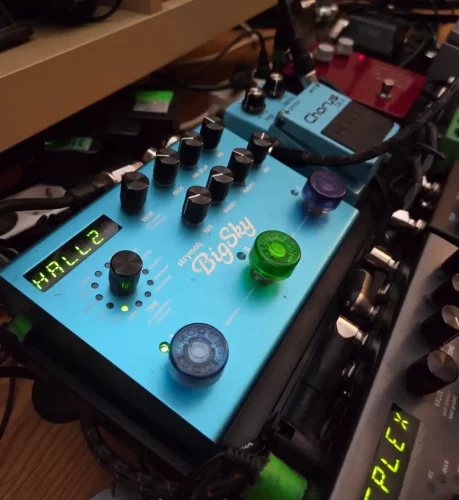
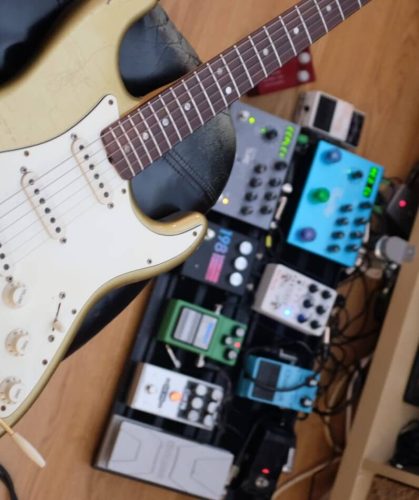
The Strymon BigSky delay pedal is never missing from any of our online guitar recordings.
If you are going all in and want to get your hands on perhaps the best reverb pedal available on the market, here we talk about the one that is never missing from our pedalboard when recording guitars online: the Strymon BigSky. We are entering the top tier of spatial effects. This pedal offers 12 reverb algorithms with studio-class fidelity (including its legendary Cloud, Bloom, Chorale, Shimmer, Spring, and Plate modes), plus 300 presets and full MIDI control. Its sound quality is so powerful that it transcends the six strings; it is a processor you will see producers all over the world constantly using on their mix sends to bring synthesizers, vocals, and many more elements to life.
La forma más fácil de conseguir el resultado profesional que buscas en la producción musical de tus canciones
Where to Place the Delay Pedal in the Signal Chain?
A common question. As a general rule, the delay should be placed before the reverb, so that the repeats remain more defined and the reverb applies to the overall signal, creating a more natural and immersive effect. This placement allows the echo to sound clean and then expand—very useful both with clean tones and more complex effects.
Typical recommended order for delay:
Guitar → Compressor → Overdrive → Chorus/Phaser → Delay → Reverb → Amplifier
Another valid option, also used by many musicians, is to place the delay after the reverb. This makes the repeats carry the reverb effect, generating a more ethereal or diffuse atmosphere. Depending on your style, it might be just what you’re looking for.
As always, your ear is the final judge. Try different combinations: depending on your mix and feedback settings, the difference can be minimal… or totally game-changing.
If you work with music production software, you can also experiment with delay controls using some of the free plugins that emulate classic and modern delays. But let’s face it: setting up your own pedalboard and going to the rehearsal space—or even just playing in your bedroom—can’t be beat.
We hope this guide to the best delay pedals has helped you better understand what type of delay pedal you need, how to integrate it into your setup, and which options stand out in today’s market. Enjoy your pick!
* This article contains affiliate links that help us keep our site running. Don’t worry: the price you pay is the same! If you buy something through these links, we’ll receive a small commission. Thank you for your support!
Cover photo: Vladyslav Dukhin

Article written by Vicen Martínez, music producer, guitarist, and songwriter. Founder of GuitarRec – Online Recording Studio.