
Music Contracts for Songwriters and Artists (Complete Guide)
In today’s music industry, whether you’re part of a label or working independently, you’ll likely come across various types of contracts at some point: publishing, distribution, record label, management or booking. While you may initially handle everything yourself —uploading your music, booking shows, coordinating releases— as your career progresses, it can be crucial to rely on professionals and agreements to help you take the next step.
Music should always come first: your sound, your message, your vision. But if your project starts gaining momentum, understanding how contracts work can make a big difference. This guide breaks down the main types of music contracts—their advantages, risks, and what you should know before signing. And remember: having a lawyer specialized in music is not just a good idea, it can be key to protecting your artistic and professional future.
Publishing contract: your work, your rights
The music publishing contract is an agreement between a writer (or songwriters) and a music publisher. The writer grants certain exploitation rights over their works (the composition, not the recording) in exchange for financial compensation.
What is granted in a publishing contract?
- Economic rights: these are the rights that allow you to earn money from your songs. They include, for example:
- When someone streams your music (on platforms like Spotify or YouTube).
- When your song is played on the radio, TV, or in a bar (this is called public performance).
- When it is used in a movie, commercial, or video game (known as synchronization).
- Moral rights: the right to always be recognized as the author of the work. These cannot be sold or transferred, and always belong to you. For example, no one can sign your song as their own even if you’ve signed a publishing deal.
What is a music publisher and what do they do?
Today, the role of a music publisher or publishing company goes far beyond printing sheet music. A good publisher should:

- Boost the visibility of works on digital streaming platforms (DSPs) and in the media.
- Manage rights in digital environments.
- Facilitate synchronizations (for film, ads, series, video games).
- Offer advances against future royalties (depending on how established your catalog is).
- Register your songs with collective management organizations (SGAE, SACM, etc.).
Still, make sure to register your songs properly. It’s important to remember that copyright is born the moment we compose a song; registration doesn’t give you ownership, but serves as proof in case of a dispute—unlike trademarks, which belong to whoever registers them first.
Publishing contract duration and common percentages
The publisher may offer a financial advance that is then recouped from the income generated by the author’s catalog (not only the signed songs). Contract durations can vary from 3–5 years up to 24, although in Spain the law establishes a maximum of 15 years—extendable if the contract includes commissioned works—according to the Intellectual Property Law.
The same law also limits the share the publisher can receive: they can never earn more than 50% of the income generated by the work. In practice, publishers often receive between 40% and 50%, though in simpler cases (without syncs or additional services), this may drop to 20% or 30%.
In addition to composing, if you also perform or play your own songs—that is, if you sing, play instruments, or produce the recording—it’s important to also join a performers’ rights management organization. In Spain, for example, you can register with AIE (Artistas Intérpretes o Ejecutantes) in Spain or SoundExchange (worldwide) , which is in charge of collecting and distributing rights generated by the public broadcast of recordings (radio, TV, venues, etc.).
Advances, duration, and terms
The publisher may offer an advance that is then recouped from all royalties generated—not just from the signed songs, but from your entire catalog. Contract durations can vary widely, ranging from 3–5 years up to 24 years, depending on the advance. In Spain, however, the law sets a maximum of 15 years, extendable if there are future commissioned works. In addition, the Spanish Intellectual Property Law limits the publisher’s share to a maximum of 50% of the income generated from publishing rights. Typically, the publisher’s share ranges from 40% to 50%, though in some cases—especially when fewer services are offered—it can go down to 20%–30%. It’s essential to negotiate the number of works you’re required to deliver each year and review whether there are clauses involving assignments or unfairly unbalanced revenue splits.
License and distribution contracts
When it comes to the recording (the master), distribution and license contracts come into play. Both allow a company (such as a distributor or label) to commercialize your music. The key difference lies in who retains ownership of the master: generally, the master belongs to whoever funds the recording. So, if a label covers the costs, it usually retains the rights. However, if the artist finances the recording independently, they maintain full ownership.
In our online music production service designed for independent artists, 100% of the master ownership remains with the artist we work for.
What is a music distribution contract and what does it offer artists?
A distribution contract allows the artist to retain rights to the master. The distributor takes a cut (usually less than 15–20%) to place your music on digital platforms. For independent artists, it’s common to use a distributor (or aggregator) for some of your songs, without exclusive rights to your full catalog, paying an annual fee and a percentage that can range from 0% to about 15% of streaming revenue. However, this type of service, while helpful for independent artists, does not include promotion. That will be entirely your responsibility.

On the other hand, for artists with some traction, some of the top music distributors offer contracts with additional services (also known as distribution with services), which may include marketing, graphic design, A&R consulting, or communication campaigns. These deals, which are closer to standard label agreements than simple distribution, may involve commissions of up to 30%. If there’s a financial advance, it’s common for the contract to include exclusivity and last until the advance is recouped. In any case, always assess whether the services offered truly suit your needs—and of course, the length of the commitment.
What is a music license contract and how is it different from a distribution deal?
In a license deal, you grant exploitation rights to the master for a limited period without transferring ownership. This typically works on a 50/50 model, where the label or distributor invests in marketing and distribution, and profits are split equally.
It’s increasingly common for artists and songwriters to have their own home studio and collaborate on music production with other independent artists or online recording studios like ours. This allows them to produce their music with professionals while maintaining full control and ownership of the master. In such cases, a licensing deal is an excellent option, giving artists access to professional resources without giving up ownership.
This type of agreement is often seen in liner notes as: ℗ Artist Name, under exclusive license to [label name]. It’s a hybrid model that lies somewhere between independent distribution and a traditional record deal, which we’ll cover next.
Record Label or 360 Deal: Advantages, Terms, and Key Aspects
This is undoubtedly the most comprehensive, complex, and often most coveted contract for many artists and songwriters. Signing with a record label—whether a major company or an independent label—means that the company will finance the recording of the project and, in most cases, also handle part of the promotion. In return, the label obtains ownership of the master, along with other exploitation rights to the recorded music.
The artist, in turn, agrees to deliver a specific number of albums. Today, the most common model is the 1+1+1 contract, meaning an initial deal for one album with the label having the option to renew after each release. This type of agreement can be a powerful tool to boost the artistic and professional development of the project, especially when there’s a long-term vision and a team committed to building a solid career.
However, it’s not all benefits. This model also comes with significant trade-offs: the artist’s revenue share is usually lower than with more independent arrangements, and they give up ownership of the masters recorded under the contract.
What is a 360 Deal and Why Is It Used?
The 360 deal emerged as a response to the decline in physical sales (CDs, vinyl, etc.) that impacted the music industry. As sales revenue dropped, labels sought to expand their share of the artist’s other income sources. In this type of deal, the label not only exploits the master and recorded music, but also other areas such as:
- A share of publishing rights (if the artist also composes).
- A percentage of live performance and tour earnings.
- A cut from merchandising, sponsorships, or commercial deals.
The logic behind this model is that if the label is taking the financial risk and funding the project’s development, they should also recoup their investment from all revenue streams it generates. Although 360 deals used to include mandatory control over booking, some labels today are letting go of live show management, thanks to the growth in streaming and sync income, which have helped rebalance the business model for certain types of artists.
Here are the key elements you should review and negotiate before signing a record deal:
Key Points to Negotiate in a Record Deal
- Recording budget: there should be a reasonable minimum to ensure quality without becoming a ceiling that limits the project’s artistic potential.
- Marketing budget: even if not detailed in the contract, there should be at least a plan or proposal to promote your music on Spotify, social media, and traditional media—especially if the artist is expected to contribute to promotion.
- Artistic control: ideally, the artist should retain decision-making power over key elements such as the producer, repertoire selection, final mixes, and single choices. In practice, this is often heavily negotiated and should ideally be managed “by mutual agreement.”
- Duration and exclusivity: beyond the number of albums or years, pay attention to clauses that limit your ability to work with other labels or to re-record songs once the deal ends. These restrictions can last 5 to 10 years depending on the agreement.
- Royalties: artist shares typically range between 16% and 22%, potentially up to 30% in digital environments if the deal is more favorable. However, percentages may be lower if the label covers all upfront costs and the artist lacks a solid fanbase. It’s critical to clarify what the percentage is based on: some labels calculate it from total global revenue, while others only from what reaches your country after intermediaries take their cut.
- Booking and live shows: if you give up a percentage of live income under a 360 deal, make sure it’s clear whether that cut applies to the gross or net income from shows (i.e., before or after production, musician, and equipment costs are deducted).
Regarding production expenses, in the U.S., it’s common for these to be “recoupable”, meaning the artist must repay them with future earnings before receiving profits. In contrast, many European contracts treat these as non-recoupable, so they’re not deducted from royalties. Either way, it’s crucial to have legal advice to fully understand the terms.
Tip: always consult with a lawyer specialized in music law before signing any record deal. Every clause can have a major impact over time.
Music Management Contract: Roles, Duration, and Key Aspects
The management contract governs the relationship between an artist and their manager, who is responsible for planning, developing, and managing their career. This contract is key to any artistic project’s growth, as it directly affects strategy, decision-making, and long-term profitability.
What’s the Difference Between Management and Booking?
Before diving into the management contract, it’s important to understand the difference between a manager and a booking agency, as they’re often confused or overlap:
- Music management: the manager oversees the artist’s overall career. This includes artistic development, strategic planning, negotiations with labels and publishers, sponsorship deals, image management, and coordinating releases.
- Music booking: focuses solely on booking concerts and tours. They negotiate dates, fees, and technical requirements with promoters, venues, and festivals.
In some cases—especially early on—the same person or company may handle both roles, but ideally, each function should be distinct and professionalized as the project grows.
Duration of a Management Contract and Sunset Clauses
This type of contract usually has a medium to long duration, typically around 3 years or more. Many management contracts also include an irrevocable mandate, allowing the manager to continue receiving commissions from deals made during their tenure—even after the relationship ends.
To avoid unfair situations, it’s advisable to negotiate a sunset clause, which gradually reduces the manager’s commission percentage over time. This ensures fair compensation while protecting the artist’s future independence.
Commission Percentage and Advances: What to Consider
The manager typically earns between 15% and 20% of the artist’s gross income. However, it’s vital to clearly define which income sources the percentage applies to and under what conditions.
A particularly sensitive issue is commissions on record label advances. It’s recommended to specify in the contract whether the manager’s cut is calculated before or after recording costs are covered, as this can significantly affect the artist’s net income.
Music PR Companies
PR agencies are external companies in charge of promoting releases across media, press, blogs, playlists, radio, and more. They usually work on a per-campaign basis and may operate under separate agreements or as part of broader deals.
Important: not all contracts include promotion. That’s why it’s essential to assess whether hiring an external company or managing promotion in-house is the best fit.
The Other Side of Music Contracts: Strategy, Knowledge, and Art
Everything you do to develop your music project independently—growing on social media, building a strong live presence, releasing quality music—will give you more bargaining power when it comes time to sign a music contract.
That said, musical and artistic quality should always be your top priority, supported by a clear vision for visual content and branding. But understanding how the industry works, and how the companies that have been working with artists for years are structured, will help you protect and strengthen your career.
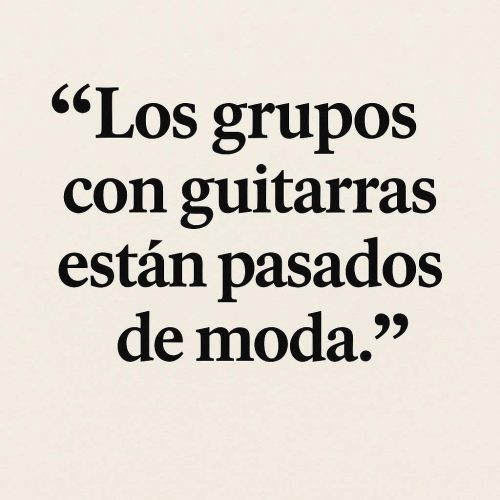
“Guitar groups are on the way out. We don’t like their sound, and guitar music is passé.” — Letter from Decca Records rejecting The Beatles, 1962
Oh, and remember: no one in this industry truly knows which project will succeed and which won’t. History is full of surprises. The most important thing is to keep creating, learning, making thoughtful decisions, and above all, taking care of your mental and emotional balance. Nothing is more valuable than being well within yourself to sustain a long-term career. Wishing you lots of luck and strength on your journey!
You might also be interested in: check out our article on how to divide the copyrights of a song.

Article written by Vicen Martínez, music producer, guitarist, and songwriter. Founder of GuitarRec – Online Recording Studio.